
Choosing the right microphone is the first step toward achieving clean, professional audio. When creators upgrade their setup, they usually notice an instant jump in sound quality. That’s why selecting a mic that delivers clarity, depth, and low noise is essential. The RØDE NT1 5th Gen podcast mic stands out because it offers studio-level performance without making things complicated. Whether you’re recording vocals or instruments, it captures rich detail while keeping the sound natural and smooth—making it a perfect choice for podcasters and content creators who want professional results with ease.
Many beginners struggle with microphones that introduce hissing, distortion, or harsh tones. The RØDE NT1 5th Gen podcast mic solves this problem by keeping recordings clean and professional—even in simple home studios. Its modern design is easy to use and ensures a flexible workflow for creators of all kinds.
As podcasters, musicians, and YouTubers grow in their craft, they need tools that remain reliable. That’s why investing in a microphone that works across multiple formats—podcasts, vocals, video content, and music—is a smart choice. With just practice and a quiet room, the RØDE podcast mic gives creators confidence by capturing sound exactly as intended. It’s equally effective for beginners seeking simplicity and advanced users demanding premium audio without a complicated setup.
Features of the RØDE NT1 5th Gen Podcast Mic
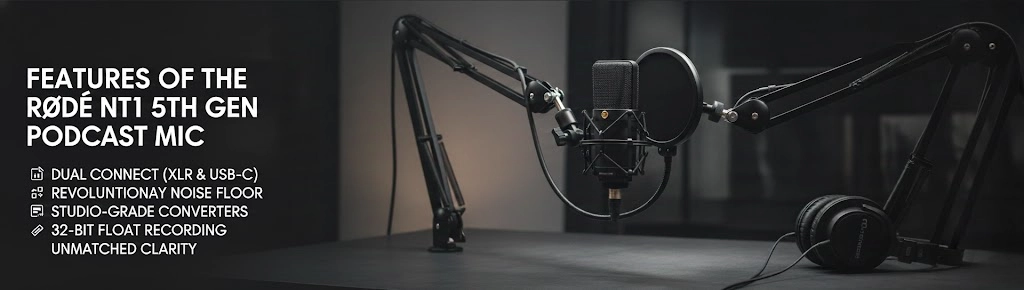
The RØDE NT1 5th Gen podcast mic is built to deliver professional audio with ease and reliability. Perfect for any setup—whether it’s a home studio, professional environment, or content creation space—it offers a balanced mix of warmth and crystal-clear sound. From vocals and instruments to podcasts and streaming, this microphone adapts seamlessly to your needs.
Durable and user-friendly, it minimizes background noise and handling sounds while offering simple digital controls. Both beginners and experienced creators can achieve clean, steady audio without sacrificing quality.
Key Features
- Ultra-low self-noise for pristine recordings
- Dual USB/XLR design for flexible setups
- 32-bit float recording for high-resolution audio
- Smooth, natural tone ideal for vocals and instruments
- Strong build quality for long-term durability
- Internal shock mounting to reduce handling noise
- Advanced DSP (Digital Signal Processing) for enhanced clarity
Why It’s Great for Studios, Podcasts & Content Creation
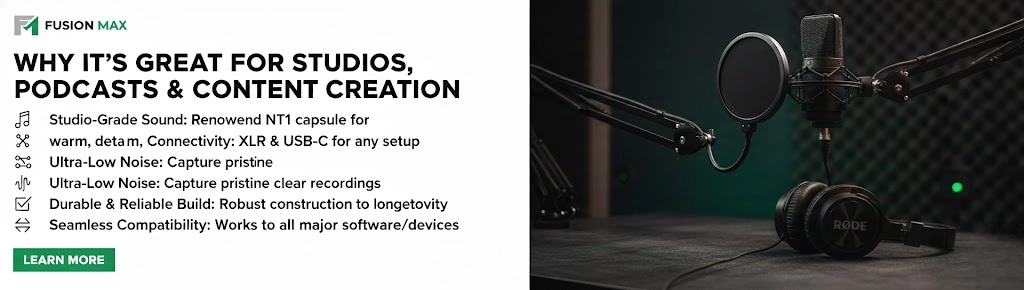
The RØDE NT1 5th Gen stands out because it fits different creative needs without making things complicated. For instance, it can act like a classic condenser microphone, giving soft and warm tones, or work as a digital plug-and-play option for quick recording. This flexibility makes it ideal for studios that handle multiple projects. Thus, if you run a production setup, you get clean audio right away without heavy editing. The dual connection system also helps creators shift between desktops, laptops, and audio interfaces with ease.
For podcasters, the mic brings a full and natural sound that feels close and friendly. Its clarity is perfect for speech-focused content. Moreover, many creators consider it the best mic for podcasting because it reduces background noise and keeps the voice smooth. The internal shock mount and pop filtering also reduce unwanted sounds. This microphone works great for podcasts, whether you’re just starting out or are a professional.
Musicians like how it picks up on subtle sounds, which makes it a good choice of mic for vocals. It keeps your voice sounding full and warm, which is key for expressive performances.
Benefits at a glance:
- Professional sound without complex settings
- Works well for live streaming and spoken content
- Suitable for singing, voice-overs, and instruments
- Reliable performance for daily studio use
- Smooth workflow for both beginners and experts
Who Should Use the RØDE NT1 5th Gen?
The RØDE NT1 microphone suits many types of recording setups. Since it blends warmth, clarity, and flexibility, it fits different creators’ needs. Its design works in home studios, professional rooms, and content spaces. Hence, anyone who values clean, rich audio will find it a helpful recording companion.
Podcasters and YouTubers
Podcasters and YouTubers want a microphone that captures every word with clarity. The NT1 5th Gen mic helps them create crisp audio that sounds professional without heavy editing. It reduces background noise and keeps the voice front and center. Whether you’re recording interviews, reactions, or storytelling, the mic delivers consistent sound. Its USB option makes it great for creators who want a plug-and-play workflow. Content quality improves quickly, and listeners enjoy a smoother audio experience.
Home Studio Musicians
Home studio musicians need a microphone that picks up emotion and detail. The RØDE NT1 5th Gen captures vocals, guitar, piano, and other instruments with a balanced tone. Its low noise keeps recordings clean even in untreated rooms. Besides that, it’s a natural sound, which makes music expressive and warm. Musicians can use the USB connection for simple setups or switch to XLR for full studio sessions. So, it adapts well to every stage of creative growth.
Voice-over Artists
Voice-over artists rely on clear, smooth, and consistent audio. This vocal recording mic delivers warm tones without harshness. It works well for commercials, narration, dubbing, and character voices. Its wide dynamic range captures every nuance, and it stays stable during long sessions. Additionally, the built-in pop protection keeps plosives under control, helping artists record clean takes in fewer attempts.
Tips to Get the Best Results from NT1 5th Gen
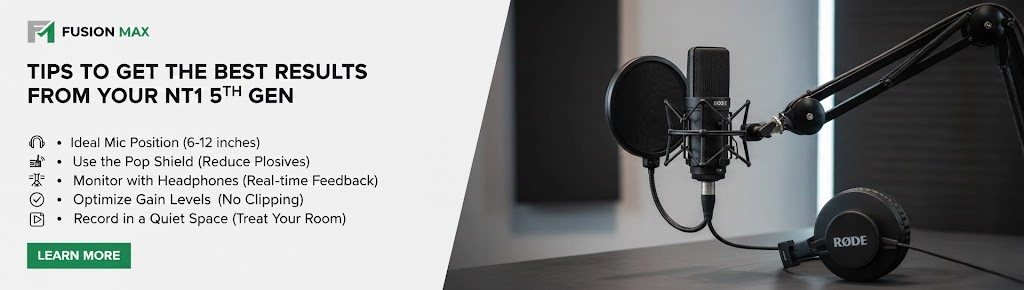
Getting great sound from the RØDE studio mic is simple when you follow proper mic placement, gain settings, and a few basic recording techniques. Small adjustments create clear and professional audio.
To get the best sound:
- Place the mic 6–8 inches from your mouth or instrument for a balanced tone.
- Use the shock mount to reduce vibrations and handling noise.
- Place your pop filter right to stop air from ruining your recording.
- Find a quiet spot or use acoustic treatment to get clearer audio.
- Set your input gain carefully, so loud parts don’t distort.
- Use USB mode and play with the DSP settings a little to make small improvements.
- See what distances and angles make your voice sound best.
- Move the instruments around until you get the sound you want.
- Put the mic a bit to the side for a warmer vocal sound.
- Listen with headphones as you record, so you hear any problems right away.
Conclusion — Is RØDE NT1 5th Gen Worth It?
To sum up, the RØDE NT1 5th Gen podcast mic is a great choice if you want superior sound without a complicated setup. It gives you clear audio, very little background noise, and the option to use either USB or XLR. It’s good for beginners, podcasters, musicians, and voice-over pros. Plus, its warm, natural sound fits all kinds of content.
If you’re upgrading from a basic condenser mic, the NT1 5th Gen delivers a noticeable leap in quality. Fusion Max ensures it adapts to your workflow, whether you’re recording solo content, running a home studio, or scaling up to full production.
Frequently Asked Questions
Yes, you can just plug it into your laptop using the USB. No need for additional equipment like an audio interface. Just pick it as your input, and you’re all set to record with great, clear sound.
The NT1 5th Gen works well for recording instruments. It captures clear, detailed sound from guitars, pianos, and even soft drums. Its low noise and wide range make it a good option for home studios, musicians, and those new to instrument recording.
For fast and simple recording, USB microphones are the way to go—no extra equipment needed. They’re great if you’re just starting out or want a basic setup. If you need total control, audio interfaces, or plan to do some serious mixing, then XLR microphones are your best bet. Both types can give you great sound; it just depends on how you like to work
Yes, it works great for all three. Its warm, clean sound enhances voice-overs, tutorials, and narration. Streamers get consistent audio with low noise. It also delivers high-quality sound for video content, making it a reliable all-around microphone for creators.